How WhatsApp's Key Transparency Changed the Game for Encrypted Messaging Okay so let's talk about something actually important for once - how WhatsApp made their encryption more trustworthy without making us jump through hoops. You know how every messaging app claims to be "secure" these days? Well WhatsApp actually put their money where their mouth is with this Key Transparency thing. Let me explain why this matters more than you might think. Visual from their tech docs - looks complicated but trust me it's cool The Big Problem Nobody Talks About So we all know WhatsApp uses end-to-end encryption. Great. But here's the sketchy part nobody mentions - how do you REALLY know you're talking to who you think you are? Like, what if: Some hacker swapped the encryption keys without you knowing? There's a middleman reading your messages right now? The app itself got compromised somehow? Scary stuff right? That's where Key Trans...
Get link
Facebook
X
Pinterest
Email
Other Apps
Advertisement
Flexible Continuous Integration for iOS at Airbnb
Get link
Facebook
X
Pinterest
Email
Other Apps
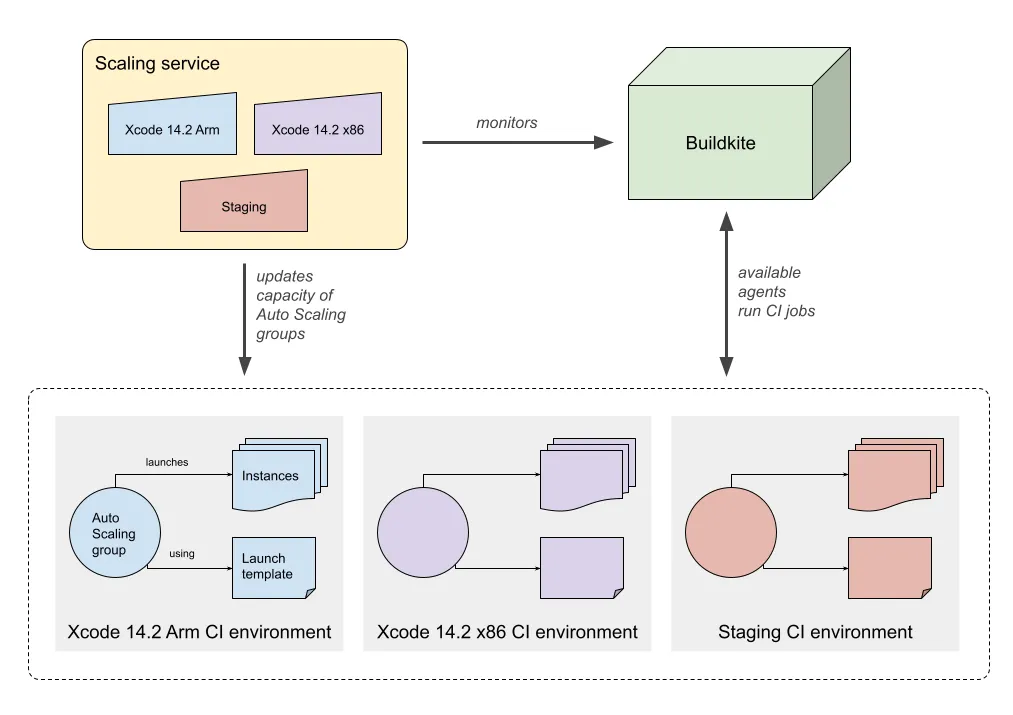
A sketch of Airbnb’s new iOS CI system.
Imagine a bustling kitchen where chefs are preparing hundreds of dishes simultaneously. Now, imagine if every chef had to wait for a single oven to bake their dish. Chaos, right? This is the challenge Airbnb faced with its iOS development process, where a monolithic continuous integration (CI) system struggled to keep up with the growing complexity and scale of the codebase. Enter a flexible CI system, designed to handle the unique needs of Airbnb’s iOS team.
In this blog post, we’ll explore how Airbnb reimagined its CI pipeline for iOS, enabling faster builds, better scalability, and improved developer productivity. Whether you’re an iOS developer, a DevOps engineer, or a tech enthusiast, this deep dive will provide valuable insights into building a modern CI system.
The Problem with Monolithic CI
Airbnb’s iOS codebase had grown significantly over the years, with hundreds of developers contributing to the app. The existing CI system, built on a monolithic architecture, faced several challenges:
Slow Build Times: As the codebase grew, build times increased, slowing down development.
Limited Scalability: The system struggled to handle the increasing number of builds and tests.
Rigid Workflows: Developers had to follow a fixed workflow, limiting flexibility and innovation.
Maintenance Overhead: The monolithic architecture made it difficult to update or extend the system.
Designing a Flexible CI System
To address these challenges, Airbnb’s engineering team designed a new CI system with the following goals:
Modular Architecture: Break the system into smaller, independent components that can be updated or replaced without affecting the entire pipeline.
Scalability: Support a growing number of builds and tests without compromising performance.
Flexibility: Allow developers to customize workflows based on their needs.
Ease of Maintenance: Simplify updates and troubleshooting.
Key Components of the New CI System
1. Distributed Build System
The team adopted a distributed build system to speed up build times. By splitting the build process across multiple machines, they could parallelize tasks and reduce bottlenecks.
Tools Used:
Bazel: A fast and scalable build tool that supports distributed builds.
Remote Caching: Shared build caches across machines to avoid redundant work.
# Example Bazel build command
bazel build //path/to/target --remote_cache=http://cache-server:8080
2. Dynamic Test Orchestration
To handle the growing number of tests, the team implemented a dynamic test orchestration system. This system automatically distributes tests across multiple machines based on their complexity and runtime.
Benefits:
Reduced test execution time.
Better resource utilization.
# Example test distribution script
def distribute_tests(tests):
    for test in tests:
        assign_to_machine(test, find_available_machine())
3. Customizable Workflows
The new CI system allowed developers to define custom workflows using a configuration file. This flexibility enabled teams to tailor the CI process to their specific needs.
# Example CI configuration file
workflows:
  - name: "iOS Build"
    steps:
      - build
      - test
      - deploy
4. Monitoring and Analytics
To ensure the system was running smoothly, the team added comprehensive monitoring and analytics. This included:
Real-time dashboards to track build and test performance.
Alerts for failures or performance degradation.
Detailed logs for troubleshooting.
Lessons Learned
Start Small: Begin with a pilot project to validate the new system before scaling up.
Focus on Scalability: Design the system to handle future growth from the start.
Empower Developers: Give teams the tools and flexibility to customize their workflows.
Invest in Monitoring: Proactively monitor the system to identify and resolve issues quickly.
The Impact of the New CI System
The flexible CI system transformed Airbnb’s iOS development process:
Faster Builds: Build times were reduced by up to 50%.
Improved Productivity: Developers could iterate faster and spend less time waiting for builds.
Better Scalability: The system easily handled the growing number of builds and tests.
Future Directions
Airbnb’s iOS team continues to innovate its CI pipeline, with plans to:
Explore machine learning for predictive test selection.
Integrate more advanced caching mechanisms.
Expand the system to support other platforms, such as Android and web.
By embracing a flexible and scalable CI system, Airbnb is setting a new standard for iOS development. You can read more details here: Flexible Continuous Integration for iOS.